Our vocational pathways are built to meet real employer expectations. Instead of teaching
skills in isolation, we embed workplace routines, communication, and problem solving into
everyday learning so students can perform confidently. Here’s how our courses make
students employable in today’s job market.
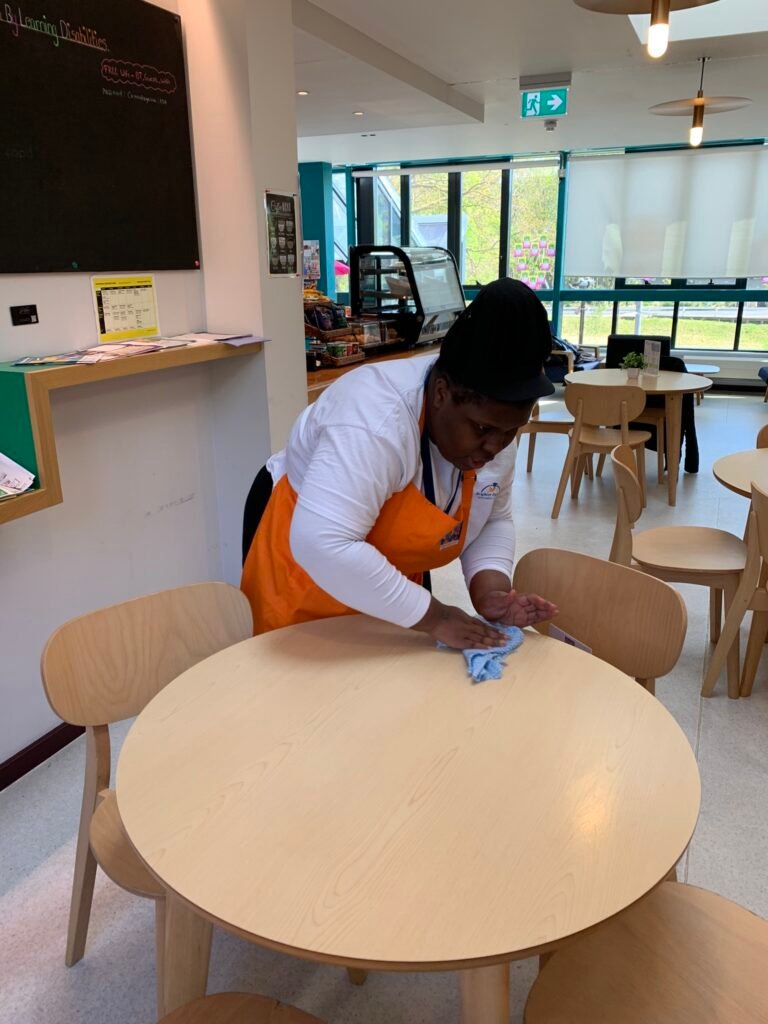
Students learn in live settings with real customers, orders, and deadlines. This builds pace, accuracy, and reliability under gentle pressure—the same conditions they will face in supported internships or paid roles. Handling genuine tasks develops confidence and the ability to transfer skills between settings.
We use a total communication approach—speech, signs, symbols, visuals, and assistive tech—so every student can greet customers, follow instructions, ask for help, and give simple updates to supervisors. Role-play, scripts, and gradual fading of prompts lead to clear, confident interaction on the job.
Learners practise calm responses to everyday challenges: missing items, last-minute changes, equipment not working, or a customer query. They use simple steps—stop, check, choose a safe action, seek help when needed—to keep tasks moving. Employers value this practical, measured approach
Students work alongside peers and staff, sharing tasks, taking turns, and giving and receiving feedback. They learn polite, professional behaviours—listening, thanking, clarifying, and staying on task—so they fit well into team routines and contribute positively to workplace culture
With real service points on site, students practise welcoming people, managing simple enquiries, and handing over finished work with care. They learn that presentation, tone, and reliability shape the customer’s experience—skills that are transferable across sectors.
Expectations rise steadily: from practising single tasks to managing short sequences, then contributing to a section with lighter supervision. Many learners progress to extended placements where they apply skills at pace and demonstrate consistency over time—key signals of job readiness.
Students leave with real experience, evidence of competence, and the confidence to contribute from day one—whether that’s in a supported internship, volunteering with progression, or paid part-time employment. Our approach is practical, measured, and focused on what employers value most: consistency, communication, and care.
Students leave with real experience, evidence of competence, and the confidence to contribute from day one—whether that’s in a supported internship, volunteering with progression, or paid part-time employment. Our approach is practical, measured, and focused on what employers value most: consistency, communication, and care.
If you are exploring specialist further education options for a young adult with learning disabilities, we would love to welcome you to Brighter Futures Specialist College.
Specialist further education for young people with learning disabilities aged 16–25. Building independence, skills and confidence for life.
Monday – Friday – 10.00 – 16.00
Saturday – Closed (weekend programs coming soon)
Sunday: Closed
© 2026 Brighter Futures Specialist College. All rights reserved.